Isle of Wight
The RookThe Isle of Wight is the site of the 1677 Grafter invasion, the first supernatural war fought on British soil. Chosen as a small, contained arena in which the Grafters could discreetly test their altered creatures, the island instead became the setting for a three-week campaign that cost hundreds of civilian lives and left a lasting wound in the history of the Checquy–Grafters conflict.
A contained arena becomes a battlefield
The Grafters sought a place where they could test their creations without drawing attention to their existence. Their creatures were powerful and resilient but so monstrous in appearance that their use risked provoking public alarm in a deeply religious age. The Isle of Wight was selected as a preliminary target: its relative smallness and isolation made it seem suitable for a controlled trial. That calculation turned the island into the entry point for a full-scale invasion.
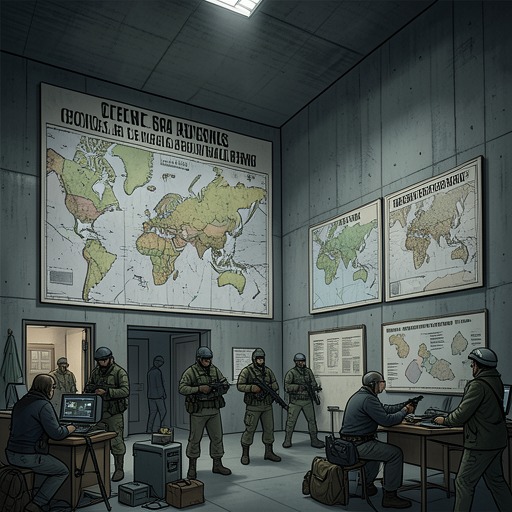
In 1677, the invaders emerged from the sea, bringing supernatural warfare onto British soil. The Checquy responded by deploying its Pawns under the direct command of its Rooks. For three weeks the forces fought across the island. Hundreds of civilians died, and the Checquy gradually cut down the Grafter creations, but each creature required the loss of dozens of Checquy soldiers. The island’s apparent usefulness as a discreet testing ground gave way to a conflict that neither side could keep small.
The cost of stopping the invasion
One battle left an entire village levelled and the surrounding fields toxic. Twelve Checquy troops, described as the last anthropophagi in the British Isles, joined forces to kill seventeen monsters. Pawn Hamish McNeil, who had leprosy, released a virulent and abnormal disease among the Grafter troops; their bodies then fell apart under the strain of their own exertion. These victories came amid destruction to both the island’s inhabited landscape and the forces sent to defend it.
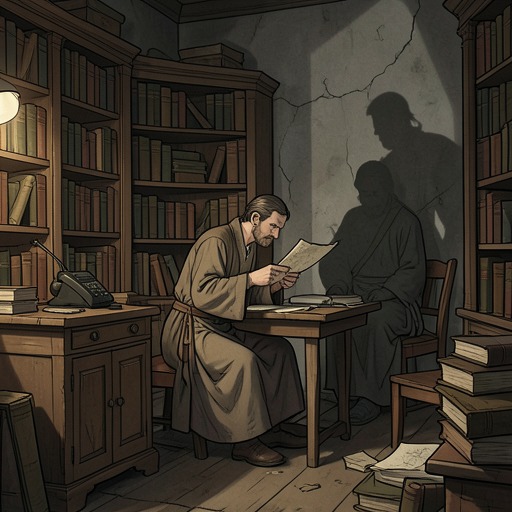
The final surviving invader was the Grafter general, a huge warrior impervious to the attacks the Checquy could bring against him. Crimson Rook John Perry, the only surviving Rook, finally linked his mind to the general’s and shot himself in the head, killing them both. Perry’s death ended the invasion, but the victory was achieved only after the defenders had been decimated and their most capable commanders lost.
From victory to treaty
After the fighting, Charles II wanted to invade Belgium, apparently believing the Checquy had demonstrated its superiority. The organization’s Lords and Ladies instead pointed out that its forces had been devastated and its best generals killed. The King accepted their assessment, and negotiations with the Belgian ruler followed. To preserve the appearance that the Checquy remained overwhelmingly strong, its weakened condition was concealed from the Grafters while a treaty was arranged in the Checquy’s favor.
Under the treaty, the Belgian ruler agreed to dissolve the Grafters: funding was withdrawn, experiments were terminated, and estates and property confiscated. The Checquy then supervised the dismantling of the project. The invasion was over, but the settlement depended on hiding how close the Checquy itself had come to ruin. The Isle of Wight thus marks not simply a military success but the starting point of a politically precarious peace.
A grievance carried across centuries
The island’s history continues to shape later contact between the Checquy and the Grafters. More than three centuries after the invasion, Myfanwy Thomas meets a skinned man in a tank who says that he has not forgotten the Isle of Wight. She realizes that he had been present during the invasion and that he is over three hundred years old. His anger makes the historical conflict immediate: the island is not merely a past battlefield but a memory preserved by a surviving participant.
Rook John Perry’s role also remains part of the Checquy’s institutional memory. When Cyrus West identifies Perry as one of the organization’s most renowned operatives and recalls that he was key to stopping the invasion, the others fall into guilty silence at their ignorance. The contrast between Perry’s remembered sacrifice and the later Checquy members’ failure to recognize his name gives the island episode a second legacy: it is both a foundational act of defence and a history that can fade from those who inherit it.